Hybrid Library Services and Collection Move
The Graduate Theological Union Library is undergoing significant alterations to its physical and virtual services to support hybrid print and digital collections and teaching and learning services. The library website will be the place to find current information about our changes.
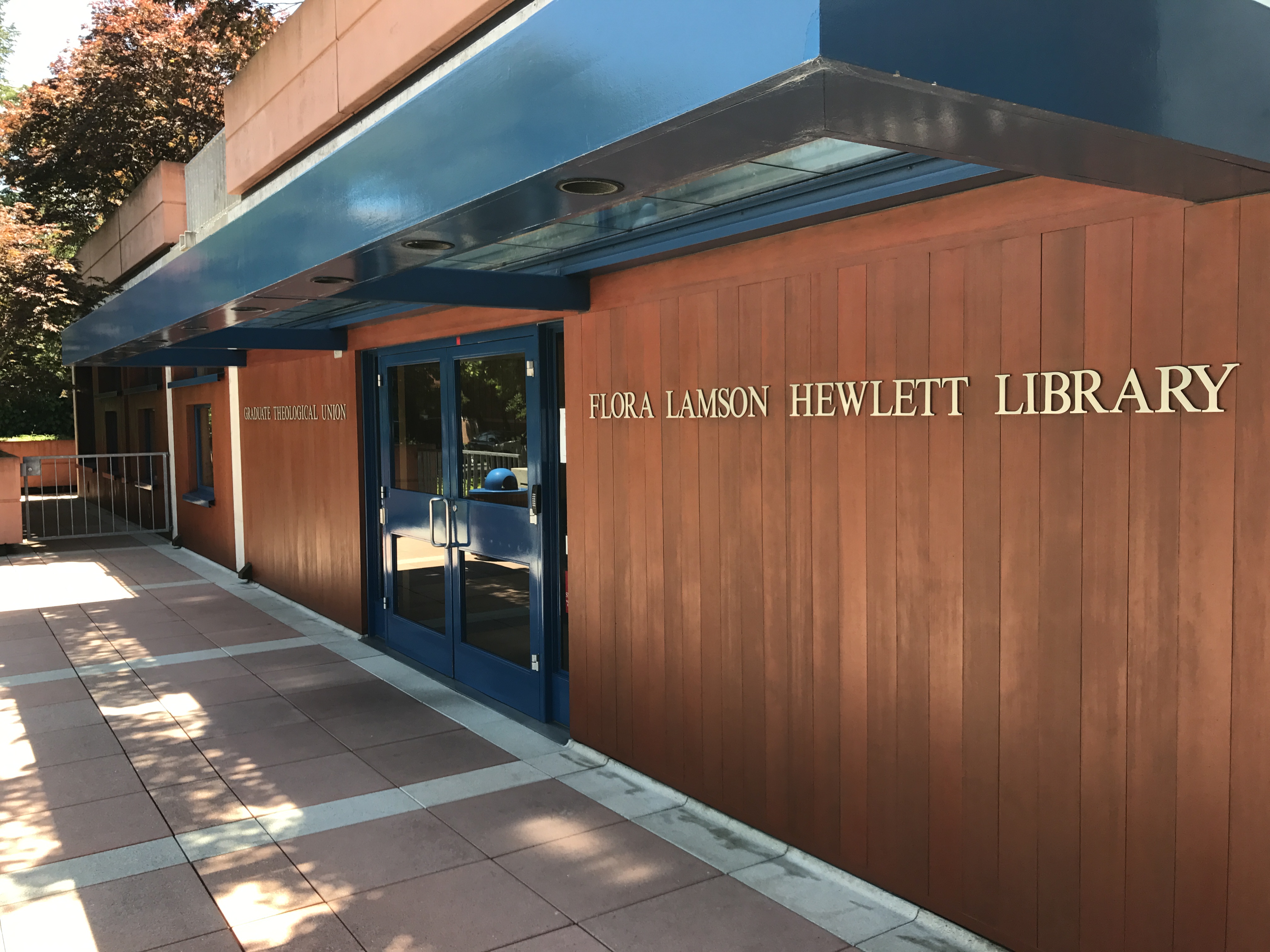
Our new entrance on Scenic is open. It's just around the corner from the Ridge Road entrance.
The FAQ section below contains updated information.
Hybrid Library Services and Collection Move
The Graduate Theological Union Library is undergoing alterations to its services to support hybrid print and digital collections and teaching and learning services. The library is preparing to support GTU’s goals of bringing the GTU community together under one roof, increasing unity and collaborative opportunities to advance interreligious learning and dialogue.
As part of this transformation, the physical footprint for the library’s collections will be significantly reduced while hybrid digital services and collections are introduced. The Hewlett Library building’s first floor and will become dedicated library space for research collections and patron services, including the reference and circulation desks.
The multi-year transition will involve 1) collection consolidation, 2) expanded collaboration with other research libraries, and 3) digital library development.
Project goals for the initial collection consolidation are to
- Consolidate the research collections
- Reduce the collection footprint 30% (~7-10,000 linear feet)
- Avoid additional long-term storage costs (permanent off-site shelving options)
- Sustain GTU’s status as a research organization by securing access to research content in digital forms and print collections held elsewhere
The GTU Library will explore and pursue several strategies, commonly used among research libraries, to address reductions in the physical footprint for collections. These include:
- Digitization and Controlled Digital Lending with a digitization partner. Donation of print collections to Internet Archive for non-destructive scanning. Users discover the digital surrogate through the library catalog and access it via a digital loan (“check out”) controlled by Internet Archive.org. Involves initial catalog reintegration of the digital surrogate, digital branding, and ongoing metadata maintenance. A mid-term strategy for libraries under immediate space pressure.
- Participation in Shared Print Programs. A form of collaboration among research libraries to ensure the persistence of research resources through distributed retention commitments to print books and journal backfiles. GTU commits to retain certain titles for 15 to 25 years and relies upon commitments made by others in formal institutional agreements among research libraries. Journal collections are verified and consolidated in high density book storage systems with full access services to partners. Interlibrary lending services ensure access to retained copies. Examples: SCELC Shared Print Program and Western Regional Storage Trust program. A durable long-term strategy.
- Participation in Shared Digitization and Digital Preservation programs. A form of collaboration among research libraries to digitize scholarly resources and support the resulting collective digital collection and digital humanities research capabilities. Includes a shared print program. Example: HathiTrust houses the digital surrogates from mass digitization by Google that occurs at Tier1 research libraries. HathiTrust provides access to public domain items and discovery (only) of in-copyright materials. As copyright years advance and copyright evaluation occurs, materials gradually roll into the public domain. A durable long-term strategy.
- Purchasing eBooks and e-Journal backfiles. Acquisition of institutional licenses to books and journals, negotiated with publishers and third-party digital preservation agents. Involves ongoing collection development, e-resource management, metadata description, digital discovery, and access management. A near and mid-term strategy for libraries with stable base funding and large one-time funding options.
Operational Phases
The multi-year project involves several overlapping operational phases.
- Phase 1: Move out of collections to be digitized. Collections are rapidly processed and removed from the building in order to be digitized. Rare books are moved to temporary storage for safe-keeping and will be returned after the collection shift. Microforms, monographs, reference materials, and some periodicals are donated to Internet Archive for digitization and future controlled digital lending.
- Phase 2: Large scale shift and signage. A subcontractor shifts the remaining collections into the existing first-floor shelves. New signage and wayfinding throughout the library help patrons locate the newly organized collections and services.
- Phase 3: Analysis and decisions for shared print contributions, digitization, and e-acquisitions. Librarians use specialized decision-support tools to compare holdings against other peer library holdings, digital holdings, and commercially available eBook and e-journal collections to make decisions about where to relocate print holdings permanently, when to purchase e-resources to replace print, and when to rely on holdings of other libraries (in print or digital forms).
- Phase 4: Enable e-Access and Adjust Policies. Librarians reconnect digitized copies or purchased copies into the catalog. Shared print and shared digital program agreements are negotiated and enabled in discovery, access, and collection management capabilities. Librarians and the faculty library committee revise the collection development policy to steer development of the collections in the future in terms of subjects, formats, number of copies, and reliance on library partners.
No, we aren't finished yet, but the physical part of the library alterations is complete. We are on Phase 4. Many of our collections now appear on archive.org and the number of digitized items grows weekly. The library staff is working more behind the scenes evaluating our resources and working to obtain the best balance between student and faculty needs and the budget. Online resources are often more expensive than physical items, but don't take up any shelf space- however more of the students and faculty are at a distance, so all of these factors are a consideration as we move through this phase.